Viking 2 landing, Utopia Planitia
Viking Lander 2 Anniversary
Image: NASA/JPL/Arizona State University · PIA04023 · NASA sourceOverview
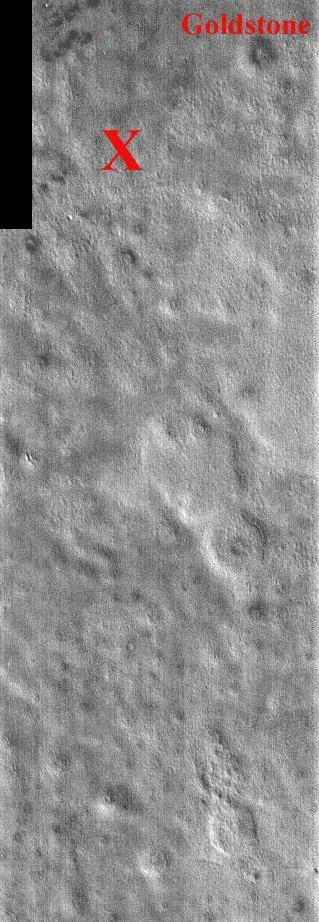
Utopia Planitia holds the distinction of being the site of humanity's second successful landing on Mars, when Viking 2 touched down on September 3, 1976. Located at 47.97° N, 225.74° W, this high-latitude location was strategically chosen near the edge of Mars' polar ice cap where water ice was expected to be found.
The Viking 2 lander made groundbreaking observations of seasonal water-ice frost formation, documenting thin layers of water ice that persisted for about 100 days during each Martian winter. Recent orbital surveys have revealed extensive subsurface water ice deposits throughout the region, covering approximately 375,000 square kilometers of southwestern Utopia Planitia.
This location represents one of the best-characterized high-latitude sites on Mars, with decades of atmospheric and soil data providing crucial baseline information for future human missions to Mars' northern regions.
Quick Facts
Viking 2 Mission Legacy
The Viking 2 lander was strategically positioned in Utopia Planitia to study high-latitude Martian conditions and search for signs of life. Mission planners selected this site near the polar ice cap where water ice was anticipated, making it an ideal location for studying Mars' water cycle and seasonal changes.
Mission Achievements
- • First observations of Martian seasonal frost
- • Documented water ice formation cycles
- • Analyzed high-latitude soil composition
- • Provided baseline atmospheric data
- • Operated 1,281 sols (3.7 Earth years)
- • Transmitted over 18,000 images
Scientific Discoveries
- • Water ice frost formation in winter
- • Periglacial terrain characteristics
- • High-latitude atmospheric dynamics
- • Soil chemistry at northern latitudes
- • Temperature and pressure variations
- • Wind patterns and seasonal changes
Water Ice Discoveries
Seasonal Frost Formation
Viking 2 captured the first direct observations of seasonal water-ice frost on Mars on May 18, 1979. The lander documented thin coatings of water ice on rocks and soil, with frost layers measuring 100-200 micrometers thick.
This frost persisted for approximately 100 days during each Martian winter, providing crucial evidence of Mars' active water cycle at high latitudes.
Subsurface Ice Deposits
Modern orbital surveys have revealed extensive subsurface water ice deposits covering approximately 375,000 square kilometers of southwestern Utopia Planitia. These deposits represent some of the lowest latitude water ice found on Mars.
The deposits are tens of meters thick in many areas, providing evidence for broad areas of subsurface ice throughout the northern plains.
Periglacial Terrain Features
Utopia Planitia exhibits characteristic periglacial terrain with a system of shallow troughs that may be associated with ice-wedge activity resulting from permafrost processes. Scalloped terrain is particularly prominent in this region between 45° and 60° north latitude.
These features led to the discovery of substantial underground ice deposits and provide important insights into Mars' past and present climate conditions at high latitudes.
High-Latitude Water Resources
Abundant Water Ice Resources
Extensive subsurface deposits and seasonal availability
Resource Characteristics
- • Seasonal surface frost formation
- • Extensive subsurface ice deposits
- • 375,000 km² coverage area
- • Tens of meters thick deposits
- • Lowest latitude ice found on Mars
- • Periglacial terrain indicators
ISRU Applications
- • Seasonal water harvesting
- • Subsurface ice extraction
- • Life support water supply
- • Fuel production capabilities
- • Agricultural water sources
- • Thermal management systems
Climate and Environmental Conditions
Viking 2's long operational period provided comprehensive data on high-latitude Martian climate conditions. The lander documented significant seasonal temperature variations, with winter temperatures cold enough to support water ice formation and summer conditions warm enough for sublimation.
Temperature Range
Extreme seasonal variations from -120°C in winter to -20°C in summer, with frost formation occurring during the coldest periods of the Martian year.
Atmospheric Pressure
Typical low Martian pressures with seasonal variations due to CO₂ condensation and sublimation at the polar caps, affecting local weather patterns.
Seasonal Cycles
Well-documented frost formation and sublimation cycles lasting approximately 100 days, providing insights into Mars' active water cycle.
Terraforming Assessment
High Terraforming Potential
Excellent water resources and proven habitability data
Advantages
- • Extensive baseline mission data
- • Proven seasonal frost formation
- • Vast subsurface ice deposits
- • Well-characterized environment
- • Historical mission success
- • Periglacial terrain features
- • Active water cycle evidence
Challenges
- • Extreme seasonal temperature variations
- • High latitude solar limitations
- • Long winter frost periods
- • Deep ice extraction requirements
- • Permafrost access challenges
- • Limited growing season
Future Exploration Opportunities
Utopia Planitia's combination of historical significance, extensive baseline data, and abundant water resources makes it an attractive target for future Mars missions. The region's well-documented environmental conditions and proven accessibility provide a strong foundation for mission planning.
Research Priorities
- • Subsurface ice characterization
- • Permafrost dynamics studies
- • Seasonal water cycle monitoring
- • High-latitude agriculture testing
- • Climate adaptation strategies
- • Ice extraction technology validation
Mission Applications
- • High-latitude settlement studies
- • ISRU technology demonstrations
- • Cold climate adaptation research
- • Long-term monitoring stations
- • Resource utilization pilots
- • Historical site preservation