Planum Australe (South polar cap)
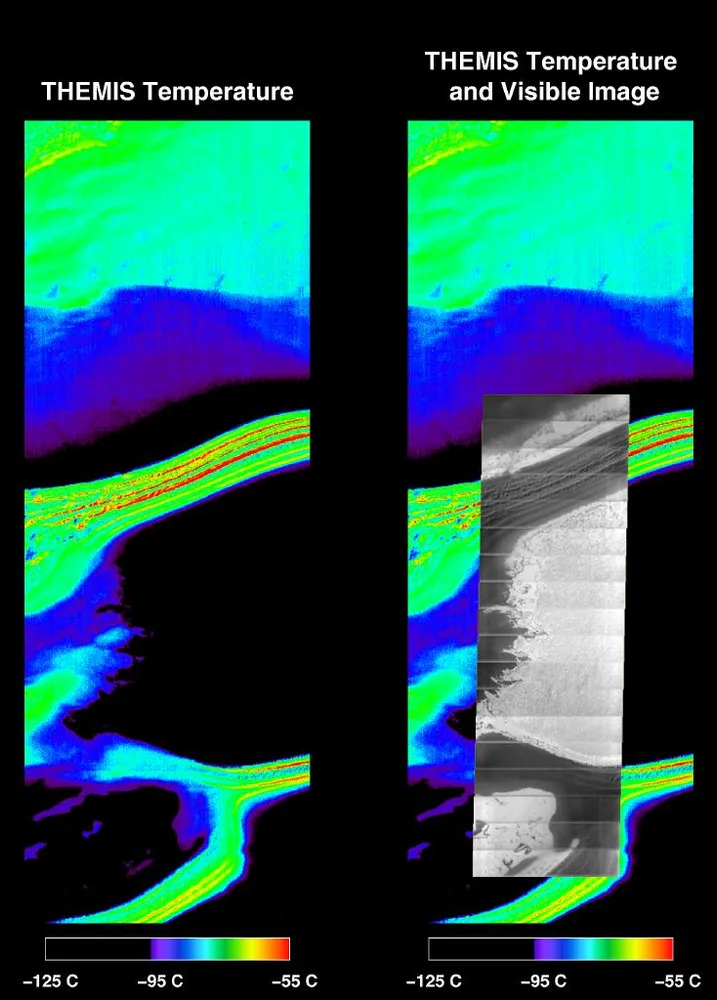
Mars South Polar Cap in Summer
Image: NASA/JPL/ASU · PIA03743 · NASA sourceOverview
Planum Australe, Mars' south polar ice cap, is a unique and complex structure that differs significantly from its northern counterpart. This ice cap features a permanent residual cap of frozen carbon dioxide (dry ice) overlaying vast water ice deposits, making it the only known permanent CO₂ ice cap in our solar system.
The south polar region has captured scientific attention due to groundbreaking radar discoveries of potential sub-ice liquid water bodies beneath the ice cap. These findings, first announced in 2018, suggest the presence of stable saltwater lakes that could represent some of the most accessible liquid water on Mars today.
Recent research has revealed massive subsurface CO₂ ice deposits containing enough frozen carbon dioxide to potentially double Mars' atmospheric pressure if released, making this region crucial for understanding both current Martian climate and terraforming potential.
Quick Facts
Unique Dual-Ice Structure
Unlike the primarily water ice north polar cap, Planum Australe features a complex layered structure with both CO₂ and water ice components. This unique configuration makes it scientifically fascinating and potentially valuable for future Mars exploration and terraforming efforts.
Residual CO₂ Cap
A permanent 8-10 meter thick layer of frozen carbon dioxide that persists year-round, making this the only known permanent CO₂ ice cap in our solar system.
Water Ice Base
Beneath the CO₂ layer lies extensive water ice deposits similar to the north polar cap, containing significant water resources for future missions.
Subsurface CO₂
SHARAD radar has revealed massive buried CO₂ ice deposits with volume comparable to Lake Superior, embedded within the water ice.
Groundbreaking Sub-ice Lake Discoveries
MARSIS Radar Detection (2018)
The Mars Advanced Radar for Subsurface and Ionosphere Sounding (MARSIS) instrument detected a 20-kilometer-wide subglacial lake 1.5 kilometers beneath the south polar ice cap. This represents the first confirmed stable body of liquid water on Mars.
The lake's radar signature suggests it contains briny, salty water that remains liquid despite the extreme cold due to dissolved salts lowering the freezing point.
Multiple Lake System (2020)
Follow-up studies confirmed the existence of multiple large saltwater lakes beneath the ice cap, suggesting a complex hydrological system that may have persisted for extended periods.
These discoveries have revolutionized our understanding of water on Mars, showing that liquid water may be more common and accessible than previously thought.
Astrobiological Implications
The potential sub-ice lakes represent some of the most promising locations for current life on Mars. The combination of liquid water, potential dissolved nutrients, and protection from radiation creates conditions that could support microbial life.
However, recent studies have also suggested that the radar signals could potentially be explained by other geological features, making direct exploration crucial for confirming the presence of liquid water.
Massive CO₂ Ice Reserves
SHARAD Discovery of Buried CO₂
The SHARAD ice-penetrating radar identified a massive body of nearly pure CO₂ ice embedded within the polar layered deposits. This buried CO₂ deposit has a volume approximately equal to Lake Superior.
The deposits represent about 80% of Mars' current atmospheric mass, equivalent to 4-5 millibar of atmospheric pressure if sublimated into the atmosphere.
Climate History Evidence
The CO₂ deposits occur in three distinct layers that correspond to episodes of atmospheric collapse during periods of low obliquity, extending back at least 370,000 years.
Each CO₂ layer is capped by approximately 30 meters of water ice, which prevents sublimation when Mars returns to higher obliquity periods with warmer polar temperatures.
Dynamic Seasonal Processes
Annual CO₂ Cycle
Each Martian winter, a seasonal cap of CO₂ frost several meters thick forms over the permanent residual cap. During southern hemisphere summer, this seasonal frost sublimates, creating dramatic atmospheric pressure changes and driving global atmospheric circulation.
The sublimation process creates powerful winds and may trigger dust storms, making the south polar region a major driver of Mars' weather patterns and atmospheric dynamics.
Swiss Cheese Terrain
The residual CO₂ cap features distinctive "Swiss cheese" patterns created by differential sublimation. These circular and elongated pits form as CO₂ ice sublimates from below, creating a unique landscape that continues to evolve under current Martian conditions.
Terraforming Assessment
Exceptional Terraforming Potential
Unique combination of CO₂, water ice, and potential liquid water
Advantages
- • Massive CO₂ reserves for atmospheric thickening
- • Potential accessible liquid water (sub-ice lakes)
- • Water ice resources for human missions
- • CO₂ could double atmospheric pressure if released
- • Unique laboratory for astrobiology research
- • Strategic location for climate modification
- • Evidence of dynamic geological processes
Challenges
- • Extreme polar temperatures (-140°C to -80°C)
- • Limited solar energy in polar region
- • Extreme seasonal day/night variations
- • Confirmation needed for sub-ice lakes
- • Complex ice dynamics and instability
- • Difficult access and harsh conditions
- • CO₂ release could be uncontrollable
Critical Exploration Objectives
Sub-ice Lake Confirmation
Direct drilling or penetrating missions are needed to definitively confirm the existence of liquid water beneath the ice cap. This represents one of the highest priority objectives for Mars astrobiology.
Advanced radar studies and potential ice-penetrating probes could provide conclusive evidence and characterize the composition, depth, and extent of any subsurface water bodies.
CO₂ Resource Assessment
Understanding the distribution, accessibility, and stability of buried CO₂ deposits is crucial for both scientific understanding and potential terraforming applications. These reserves could play a key role in any future atmospheric modification efforts.
Future Mission Concepts
The south polar ice cap presents unique opportunities and challenges for future Mars exploration. Several mission concepts have been proposed to investigate its mysteries and assess its resources.
Ice-Penetrating Missions
- • Thermal or nuclear-powered ice melting probes
- • Deep drilling systems for ice core sampling
- • Submersible exploration of sub-ice lakes
- • Advanced radar mapping of ice structure
- • Long-term monitoring stations
Resource Utilization Studies
- • CO₂ extraction and storage technologies
- • Water ice mining feasibility studies
- • Atmospheric modification modeling
- • Life support system testing
- • Energy generation in polar conditions