Oxia Planum
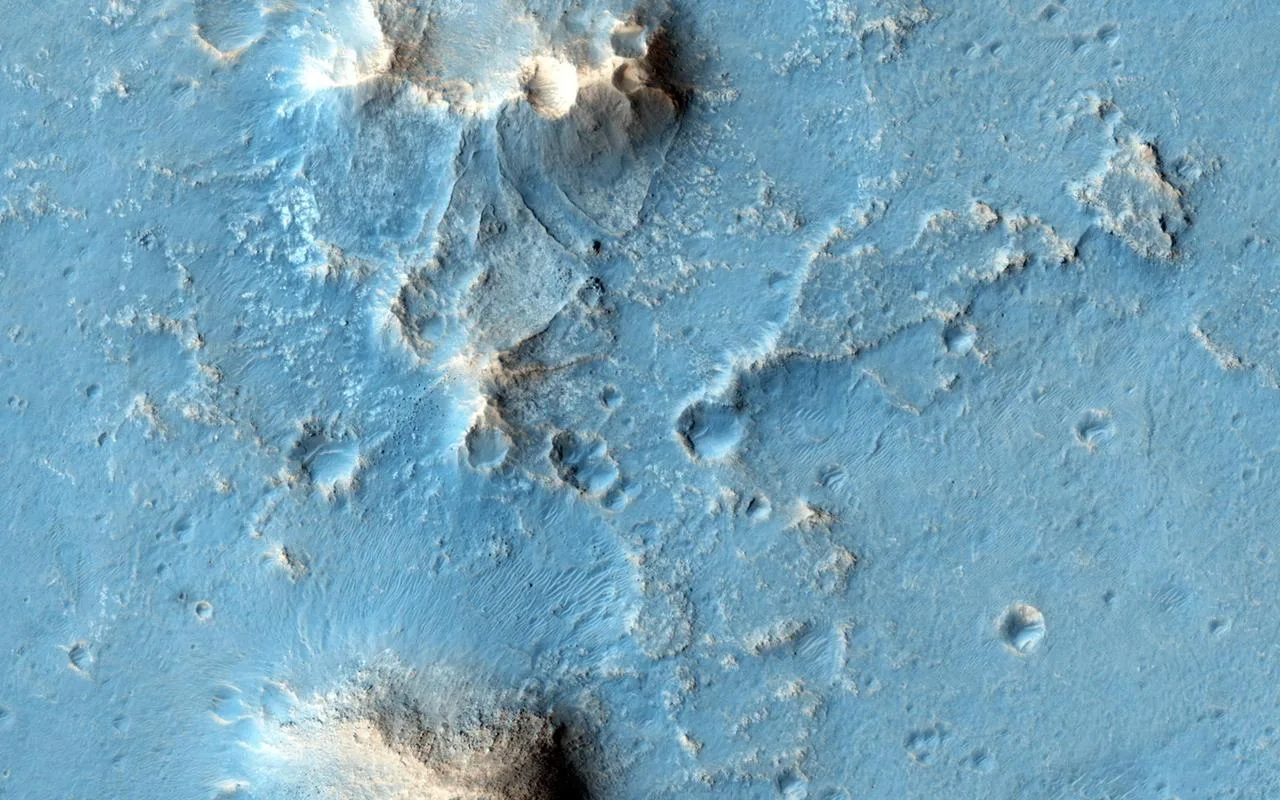
Possible Future Mars Landing Site in Oxia Planum
Image: NASA/JPL-Caltech/Univ. of Arizona · PIA18817 · NASA sourceOverview
Oxia Planum represents one of Mars' most promising locations for discovering evidence of ancient life. This 200-kilometer-wide, low-relief terrain at the southwest margin of Arabia Terra has been selected as the landing site for the European Space Agency's ExoMars "Rosalind Franklin" rover mission, scheduled for the late 2020s.
The region is characterized by extensive clay-bearing bedrock units formed during Mars' Noachian period, approximately 4 billion years ago. These iron-magnesium rich clays, primarily vermiculite-smectite types, were formed in wet conditions that may have been conducive to the emergence and preservation of life.
What makes Oxia Planum particularly exciting is that these ancient clay deposits were protected by a dark overlying layer—possibly an ancient lava flow—that prevented the decay of potential biosignatures over billions of years. Erosion has since exposed these preserved materials, creating an ideal natural laboratory for astrobiology research.
Quick Facts
Geological Features and Ancient Environments
Clay Mineral Deposits
Oxia Planum's defining feature is its extensive deposits of iron-magnesium rich clay minerals, primarily vermiculite-smectite types. These clays formed when liquid water interacted with volcanic rocks during Mars' early Noachian period, creating ideal conditions for preserving organic compounds and potential biosignatures.
The clay deposits span hundreds of square kilometers and represent some of the most accessible ancient hydrated minerals on Mars. Their composition and distribution provide evidence of at least two distinct aqueous environments during the planet's early history.
Protective Preservation
A key advantage of Oxia Planum is that its ancient clay deposits were buried and protected by a dark overlying layer, possibly volcanic in origin. This protective cover prevented the degradation of organic compounds and biosignatures over billions of years.
Subsequent erosion has exposed these preserved materials while maintaining their scientific integrity, creating natural outcrops where the ExoMars rover can access pristine samples from Mars' most habitable period.
ExoMars Mission and Scientific Goals
Rosalind Franklin Rover Capabilities
The ExoMars Rosalind Franklin rover, scheduled to land at Oxia Planum, will be equipped with unprecedented capabilities for searching for signs of past or present life on Mars. Its advanced drill system can penetrate up to 2 meters below the surface—deeper than any previous Mars rover.
- Advanced drilling capability to access subsurface samples
- Sophisticated life-detection instrumentation suite
- High-resolution imaging and spectroscopy systems
- Mobile laboratory for comprehensive sample analysis
Astrobiology Focus
Oxia Planum's selection was based on its exceptional potential for preserving biosignatures. The combination of clay minerals, protective burial, and subsequent exposure creates ideal conditions for finding evidence of ancient Martian life, if it ever existed.
Global Significance
The clay minerals at Oxia Planum are representative of deposits found across a wide area of Mars, meaning discoveries here could provide insights into habitability conditions that existed across much of the planet during its early history.
Settlement and Resource Potential
With a terraforming rating of 9/10, Oxia Planum represents one of Mars' most promising locations for future human settlement. Its abundant clay minerals, evidence of past habitability, and potential for deep subsurface access make it invaluable for both scientific research and resource utilization.
Strategic Advantages
Scientific Value
- • Exceptional biosignature preservation potential
- • Deep drilling access to pristine samples
- • Representative of global clay deposits
- • Multiple ancient aqueous environments
Resource Availability
- • Extensive clay deposits for construction
- • Evidence of ancient water systems
- • Diverse mineral resources
- • Potential subsurface water/ice
Settlement Challenges
- • Limited current surface water access
- • Dust accumulation during storms
- • High radiation exposure levels
- • Temperature extremes (-75°C to -5°C)
- • Need for subsurface resource extraction
Future Exploration and Research
Astrobiology Research Center
If the ExoMars mission successfully demonstrates that Oxia Planum contains well-preserved biosignatures or organic compounds, the site could become the focal point for Mars astrobiology research. The location offers unparalleled opportunities to study the conditions that may have supported life on early Mars.
The site's combination of scientific importance and resource potential makes it an ideal candidate for one of Mars' first permanent human research stations, where scientists could conduct detailed investigations impossible with robotic missions alone.
Research Priorities
- • Biosignature detection and analysis
- • Ancient climate reconstruction
- • Habitability assessment studies
- • Clay mineral resource evaluation
Settlement Potential
- • Astrobiology research station
- • Sample return mission hub
- • Resource utilization testing site
- • Deep drilling technology center