Nili Fossae
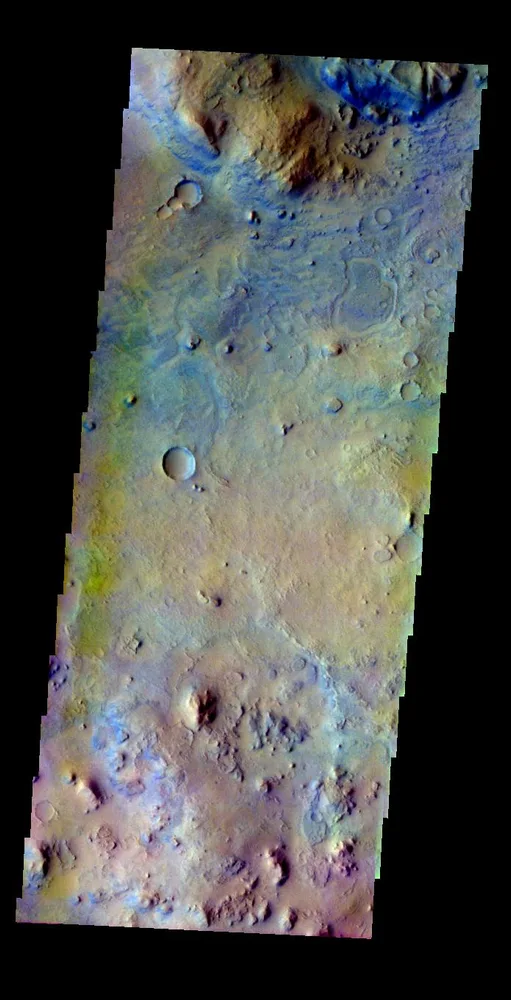
Nili Fossae
Image: NASA/JPL/Arizona State University · PIA06388 · NASA sourceOverview
Nili Fossae represents one of Mars' most scientifically intriguing regions, where an extensive 500-mile fracture system has exposed some of the planet's most ancient and pristine bedrock. This remarkable location preserves carbonate and olivine minerals that tell the story of early Mars' less acidic, potentially more habitable environment.
The region has gained extraordinary attention as a potential source of Mars' mysterious seasonal methane emissions, with observations showing significant atmospheric methane enhancements over the area. This combination of ancient minerals, fracture-exposed geology, and possible ongoing geological activity makes Nili Fossae a cornerstone location for understanding both ancient and potentially current Martian processes.
Recent discoveries of serpentine minerals alongside olivine and carbonates suggest that serpentinization processes - which on Earth can support life without sunlight - may have been active in this region, making it one of the most promising locations for astrobiological investigations on Mars.
Quick Facts
Ancient Fracture System: Window to Early Mars
Nili Fossae formed as a complex of grabens and fractures created by the massive Isidis Basin impact event over 3.9 billion years ago. The subsequent sagging of the crust under the weight of lava flows filling the impact basin created the distinctive concentric fracture pattern that follows the outline of Isidis Planitia.
Fracture Characteristics
- • Concentric graben system
- • Depths up to 500 meters
- • Post-impact crustal adjustment
- • Exposed subsurface layers
- • Linear arrangement patterns
- • Ancient terrain preservation
Exposed Geology
- • Noachian-age bedrock
- • Ultramafic rock compositions
- • Primary igneous minerals
- • Hydrothermal alteration products
- • Pristine olivine exposures
- • Carbonate precipitates
Carbonate-Olivine Bedrock: Evidence of Less Acidic Mars
Olivine Discoveries
Nili Fossae contains a 30,000-square-kilometer area rich in olivine, with surface exposures showing 30% olivine content ranging from Fo30 to Fo70 composition. The minimum grain size of 500 microns suggests these are fresh, unweathered exposures of primary igneous rock.
The preservation of olivine - a mineral that weathers rapidly in acidic conditions - indicates that this region experienced minimal exposure to the acidic environments that characterized much of Mars' later history.
Carbonate Formation
The first successful identification of carbonate minerals on Mars was made here in 2008, with spectral modeling identifying magnesite deposits spatially associated with olivine outcrops. These carbonates formed in circum-neutral pH conditions, contrasting with the acidic environments found elsewhere.
The carbonate formation represents significant CO₂ sequestration, potentially locking away 0.03-0.06 atmospheres worth of ancient Martian CO₂ in solid mineral form.
Environmental Implications
The presence of carbonates alongside olivine provides crucial evidence that early Mars had regions with neutral to slightly alkaline conditions, very different from the acidic sulfate-rich environments that dominated later periods. This suggests that ancient Mars had diverse chemical environments, some of which could have been highly conducive to life.
Research suggests these minerals may have formed from pyroclastic density currents in cataclysmic explosive volcanic eruptions, representing a style of volcanism more common in Mars' early history and potentially creating unique habitable microenvironments.
The Methane Mystery: Active Geology or Biology?
One of Mars' most tantalizing mysteries centers on Nili Fossae, where telescopic observations have detected significant seasonal enhancements of atmospheric methane. These observations, first published in 2009, suggest that methane may be actively produced in this region, though its source remains mysterious and could be geological, biological, or both.
Geological Sources
Serpentinization of olivine-rich rocks could produce methane through water-rock interactions. The fractured terrain provides pathways for subsurface processes to release gases to the atmosphere.
Biological Possibilities
Methane can be produced by microorganisms, particularly methanogens that thrive in subsurface environments. The combination of water, energy sources, and protected habitats could theoretically support such processes.
Microseepage Model
Slow release of methane through fractures and faults could occur through processes involving serpentinized rocks, creating hydrogen and methane at relatively low pressures.
Methane Observations
Serpentinization: Ancient Energy for Life
Process Discovery
CRISM has detected serpentine minerals at Nili Fossae occurring alongside olivine and carbonate in the heavily fractured unit. This association is consistent with serpentinization processes, where water reacts with olivine-rich rocks to produce serpentine minerals, hydrogen, and potentially methane.
The detection represents evidence that serpentinization was once an active process, indicating that water and energy sources were available during Mars' early history.
Astrobiological Significance
Serpentinization provides a means for prebiotic chemistry and potentially life support during a time period when life was first emerging on Earth. This process can create habitable environments independent of surface conditions and photosynthesis.
The mineral assemblages at Nili Fossae, while not directly analogous to Earth's Lost City Hydrothermal Field, indicate related geochemical processes were active in Mars' subsurface.
Hydrothermal Environment Evidence
Research suggests that carbonate-bearing rocks in Nili Fossae are composed of hydrothermally altered ultramafic rocks. This hydrothermal activity would have provided sufficient energy for biological activity, creating environments where evidence of living organisms could have been preserved in the rock record.
The combination of serpentinization processes, carbonate formation, and potential ongoing methane production makes Nili Fossae one of the most compelling locations for investigating both ancient and potentially current habitability on Mars.
Mission Considerations and Future Targets
Nili Fossae's exceptional scientific value has placed it on the consideration list for multiple Mars missions. While landing site selection often favors locations with easier access and fewer hazards, the unique combination of ancient minerals, potential ongoing activity, and astrobiological significance continues to make this region a high-priority target.
Mars Science Laboratory
Nili Fossae was on the initial list of potential landing sites for Curiosity but was removed before the final selection due to landing hazards associated with the fractured terrain.
Mars 2020 Evaluation
The region was selected as a potential landing site for Perseverance in September 2015, recognizing its astrobiology potential, though Jezero Crater was ultimately chosen.
Future Mission Priority
Advanced landing technologies and the region's unique scientific value make it a prime candidate for future sample return and life detection missions.
Terraforming Assessment
High Terraforming Potential
Unique mineral resources and potential ongoing geological activity
Advantages
- • Less acidic environment history
- • Rich carbonate and olivine resources
- • Potential ongoing geological activity
- • Evidence of past hydrothermal systems
- • Diverse mineral composition
- • Possible subsurface energy sources
- • Natural CO₂ sequestration evidence
Challenges
- • Fractured, hazardous terrain
- • Limited current water access
- • Potential seismic instability
- • Dust accumulation in fractures
- • Radiation exposure concerns
- • Access and mobility difficulties
Scientific and Astrobiological Significance
Window to Early Mars Habitability
Nili Fossae provides unique access to Mars' most ancient preserved environments, offering insights into the planet's early, potentially habitable conditions. The combination of neutral pH indicators, hydrothermal alteration, and serpentinization evidence suggests this region hosted some of the most favorable conditions for life in Mars' history.
Active Mars Processes
The potential ongoing methane production at Nili Fossae represents one of the few indicators of current geological or biological activity on Mars. Whether the source is geological serpentinization or biological processes, the region offers a unique opportunity to study active Martian processes and their relationship to habitability.
Future Exploration Opportunities
Despite landing challenges, Nili Fossae remains one of Mars' most scientifically compelling exploration targets. Advanced landing technologies and the region's unique combination of ancient minerals and potential ongoing activity make it a priority for future missions focused on astrobiology and understanding Mars' evolution.
Research Priorities
- • Methane source identification
- • Serpentinization process study
- • Carbonate formation analysis
- • Subsurface habitability assessment
- • Ancient hydrothermal system mapping
Technology Requirements
- • Precision landing systems
- • Gas detection instruments
- • Deep drilling capabilities
- • Advanced mobility platforms
- • Real-time atmospheric monitoring