Meridiani Planum
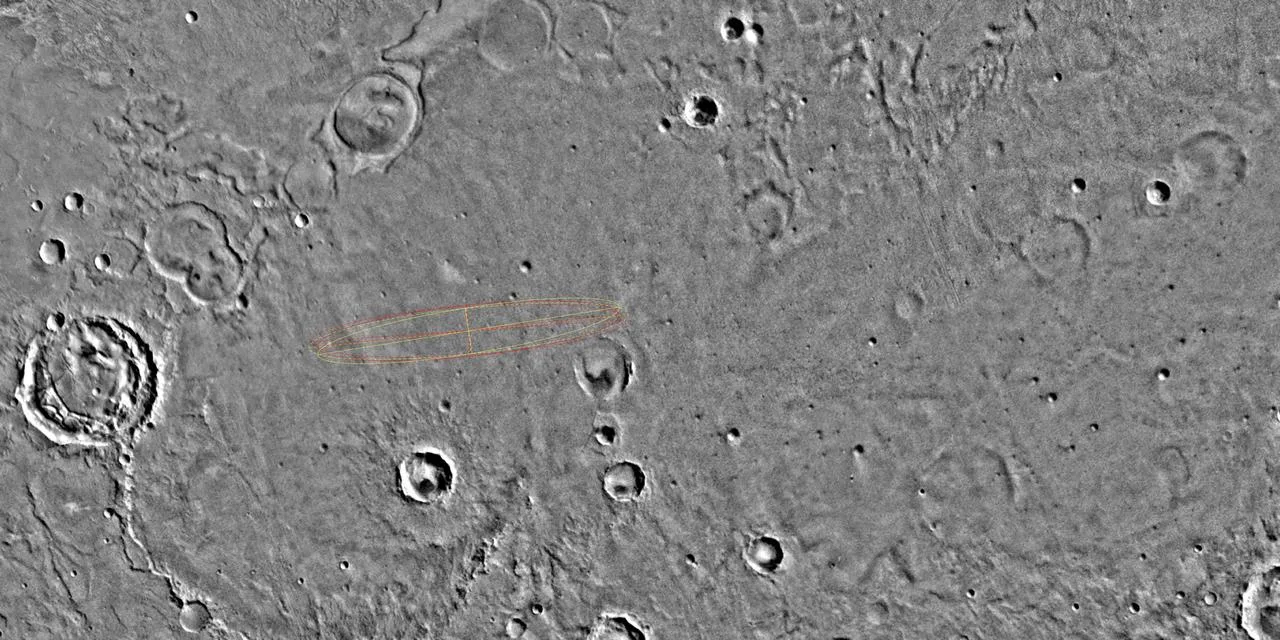
Meridiani Planum
Image: NASA/JPL · PIA04275 · NASA sourceOverview
Meridiani Planum, also known as Terra Meridiani, is a large equatorial plain on Mars that became one of the most thoroughly investigated regions of the planet. This ancient sedimentary landscape served as the landing site for NASA's Opportunity rover in 2004, which operated for nearly 15 years despite its original 90-day mission plan.
The plain sits atop an enormous body of sediments containing bound water and is distinguished by extensive hematite deposits that can only form in the presence of liquid water. The discovery of these iron-oxide minerals from orbit led to the selection of Meridiani Planum as a prime landing site for searching evidence of Mars' ancient aqueous environment.
Opportunity's ground-truth investigations revealed that the hematite exists within BB-sized spherules, dubbed "blueberries" by scientists, embedded within layered sedimentary rocks that tell a compelling story of ancient shallow water environments and acidic groundwater systems.
Quick Facts
Geological Features and Formation
Hematite "Blueberries"
The most distinctive feature of Meridiani Planum is its abundant spherical hematite concretions, nicknamed "blueberries" despite their dark gray color. These BB-sized spherules form when strongly acidic groundwater interacts with goethite-rich basaltic sandstone, converting the iron-bearing minerals into crystalline hematite.
The spherules are found both embedded within soft, layered sedimentary rocks and scattered across the surface as a "lag deposit" where softer surrounding rock has eroded away, leaving the more resistant hematite spherules behind.
Sedimentary Layers
The bedrock consists of layered sandstones formed by both wind and water processes. These rocks show clear evidence of shallow, flowing water environments with cross-bedding and ripple marks typical of ancient aqueous deposition.
Mineral analysis reveals the sediments contain 36-37% hydrated sulfates, 35% hydrated aluminosilicates, 16% basaltic rock fragments, and significant amounts of hematite and other oxides, indicating complex water-rock interactions over geological time.
Opportunity Rover Discoveries
Revolutionary Mars Exploration
Opportunity's landing at Meridiani Planum in Eagle Crater marked the beginning of the most successful Mars surface mission to date. The rover traveled over 45 kilometers across the plain, conducting the first detailed outcrop-scale investigation of sedimentary rocks on another planet.
- First mission to grind Martian rock surfaces for interior analysis
- Confirmed ground-truth evidence of hematite from orbital observations
- Discovered extensive evidence of ancient aqueous environments
- Operated 60 times longer than its planned 90-sol mission
Ancient Water Evidence
The layered rocks at Meridiani Planum preserve a detailed record of ancient water activity. Sedimentary structures, mineral compositions, and chemical signatures all point to environments ranging from shallow lakes to acidic groundwater systems that persisted for extended periods.
Preservation Potential
Iron oxide and hydroxide minerals like hematite are excellent at preserving microfossils and biosignatures. The extensive hematite deposits make Meridiani Planum a prime location for investigating whether Mars once harbored microbial life.
Settlement and Resource Potential
With a terraforming rating of 6/10, Meridiani Planum offers moderate potential for future human settlement. Its equatorial location provides excellent solar energy potential, while the extensive geological knowledge gained from Opportunity's mission makes it one of the most well-characterized regions on Mars.
Strategic Advantages
Location Benefits
- • Equatorial location for optimal solar power
- • Relatively flat terrain for construction
- • Extensive scientific knowledge base
- • Proven landing site accessibility
Resource Availability
- • Abundant iron-oxide minerals
- • Sulfate deposits for chemical processes
- • Evidence of subsurface water/ice
- • Diverse construction materials
Settlement Challenges
- • History of highly acidic groundwater
- • Limited current surface water access
- • Frequent dust storm activity
- • High radiation exposure levels
- • Temperature extremes (-80°C to -5°C)
Ongoing Research and Future Exploration
Astrobiology Research Legacy
The wealth of data collected by Opportunity continues to inform our understanding of Mars' habitability potential. Current research focuses on understanding how the hematite spherules and associated minerals might preserve biosignatures from ancient microbial life.
Laboratory studies of Earth analogs suggest that the iron-rich environment at Meridiani Planum could effectively mineralize and preserve microfossils, making it a priority target for future sample return missions or human exploration.
Research Applications
- • Biosignature preservation studies
- • Ancient climate reconstruction
- • Water-rock interaction processes
- • Mineral resource assessment
Future Mission Potential
- • Sample return mission target
- • Human landing site candidate
- • Resource utilization demonstrations
- • Astrobiology field laboratory