Jezero Crater
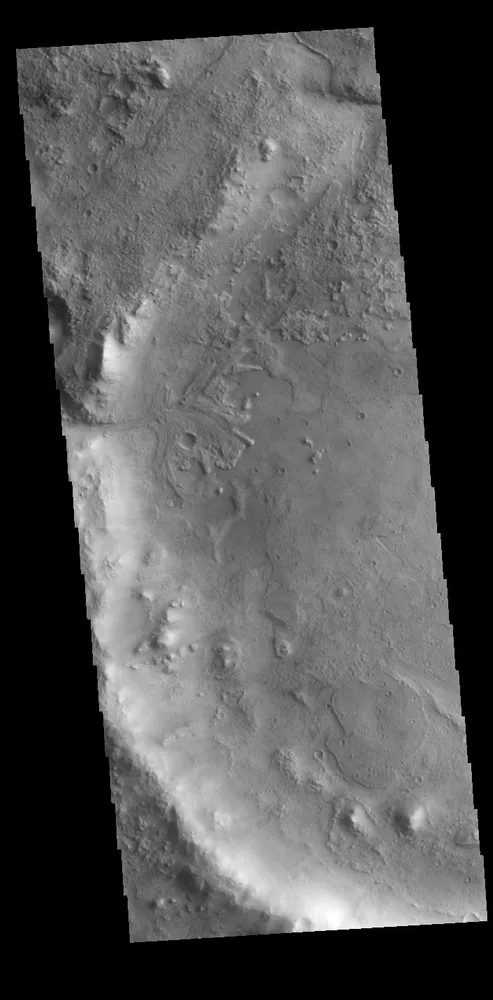
Jezero Crater Delta
Image: NASA/JPL-Caltech/ASU · PIA26252 · NASA sourceOverview
Jezero Crater is one of the most scientifically significant locations on Mars, serving as the landing site for NASA's Perseverance rover mission. This ancient impact crater, formed nearly 4 billion years ago, once hosted a large lake fed by an ancient river delta system. The crater preserves a remarkable geological record spanning over 3.5 billion years of Martian history.
The name "Jezero" comes from the Bosnian word for "lake," which is fitting given the crater's history as a paleolake. The delta formation within Jezero is exceptionally well-preserved, making it an ideal location to search for signs of ancient microbial life and to understand Mars' past habitability.
Since February 2021, the Perseverance rover has been systematically exploring Jezero, collecting rock samples for eventual return to Earth and making groundbreaking discoveries about Mars' geological and hydrological history.
Quick Facts
Geological History
Formation and Early History
Jezero Crater formed almost 4 billion years ago from an asteroid impact. The crater floor is made of igneous rock formed from magma underground or volcanic activity at the surface. After the crater's formation, it remained relatively dry for hundreds of millions of years.
The first evidence of water appeared when rivers began flowing into the crater, depositing sandstone and mudstone layers. This marked the beginning of Jezero's transformation into a lake basin.
Lake Period
Over time, Jezero hosted a lake that grew as wide as 22 miles (35 kilometers) in diameter and as deep as 100 feet (30 meters). Salt-rich mudstones indicate periods when the shallow lake experienced evaporation.
Fast-flowing water later carried boulders from outside Jezero, distributing them atop the delta and throughout the crater, suggesting dramatic flooding events in the lake's later history.
Perseverance Mission Discoveries
Sample Collection Achievements
As of late 2023, Perseverance has collected over 24 samples from Jezero Crater. Two samples stand out for their astrobiological significance:
- "Lefroy Bay": Contains fine-grained silica, a material known to preserve ancient fossils on Earth
- "Otis Peak": Rich in phosphate, often associated with life as we know it, and carbonate minerals
Water History Evidence
Perseverance has found clear evidence of Jezero's watery past, including delta deposits, sedimentary layers, and mineral formations that only occur in the presence of liquid water. These discoveries provide a timeline of environmental changes over billions of years.
Organic Potential
The combination of carbonates, phosphates, and fine-grained silica creates ideal conditions for preserving signs of ancient life. These minerals point to a watery, habitable environment with excellent preservation potential.
Terraforming and Settlement Potential
With a terraforming rating of 9/10, Jezero Crater represents one of Mars' most promising locations for future human settlement. Its rich geological diversity, evidence of past habitability, and ongoing scientific mission make it an invaluable site for understanding Mars' potential for life.
Key Advantages
Resource Availability
- • Evidence of subsurface water/ice
- • Clay-rich sediments for construction
- • Diverse mineral resources
- • Relatively flat delta region
Scientific Value
- • Proven landing site accessibility
- • Rich geological record
- • Potential biosignature preservation
- • Ongoing mission infrastructure
Settlement Challenges
- • Dust accumulation during storms
- • High radiation exposure
- • Extreme temperature fluctuations
- • Limited current water access
- • Thin atmosphere challenges
Future Exploration
Mars Sample Return Mission
The samples collected by Perseverance at Jezero Crater are scheduled to be retrieved and returned to Earth as part of the Mars Sample Return mission, planned for the early 2030s. This will be the first time Martian materials are brought to Earth for detailed laboratory analysis.
Laboratory analysis of these samples will provide unprecedented insights into Mars' past habitability and potentially answer the fundamental question of whether life ever existed on Mars.
Planned Investigations
- • Detailed age dating of rock samples
- • Biosignature detection and analysis
- • Mineral composition studies
- • Organic compound identification
Scientific Impact
- • Understanding Mars' climate evolution
- • Assessing past habitability conditions
- • Informing future human missions
- • Advancing astrobiology research