Gusev Crater (Columbia Memorial Station)
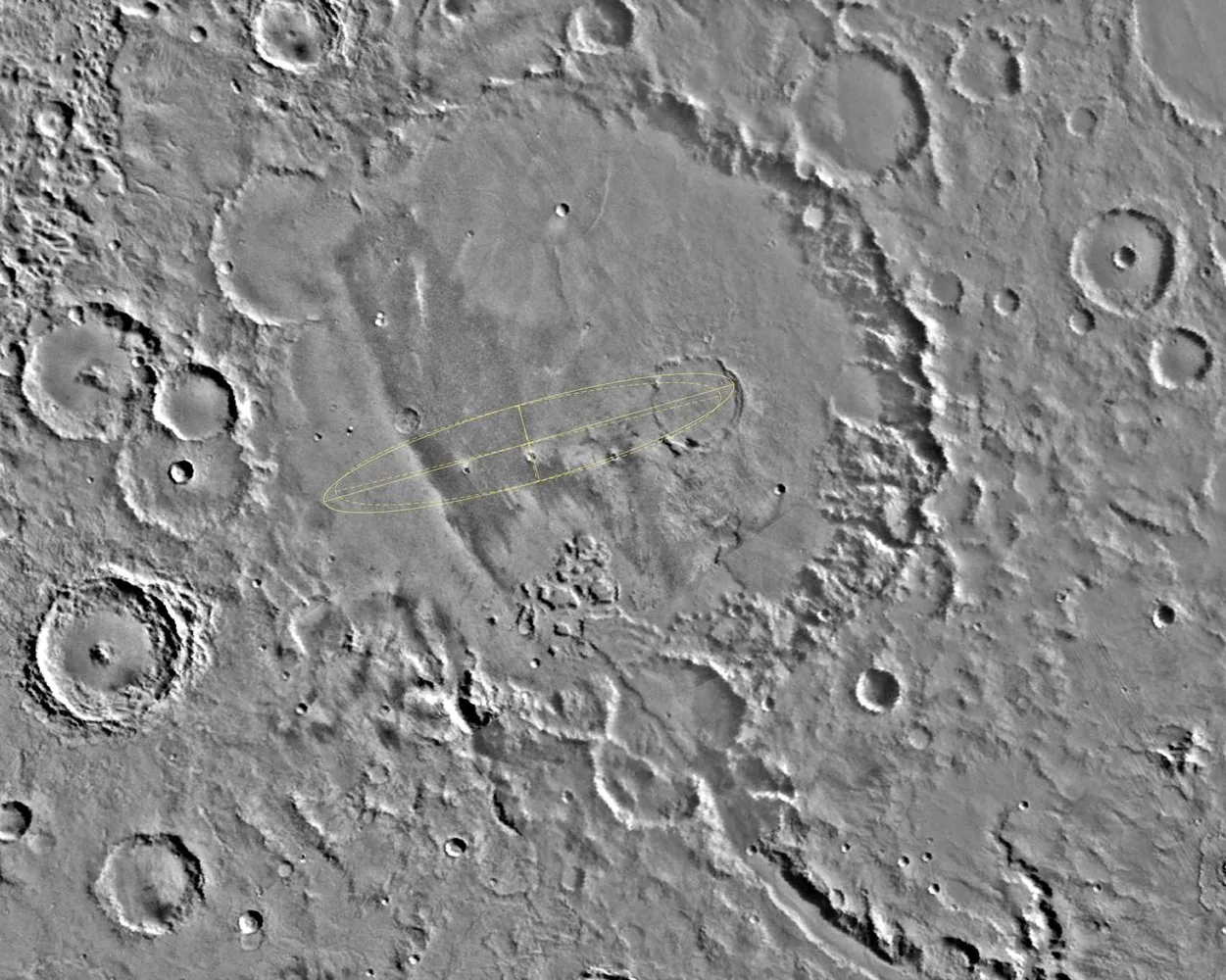
Gusev Crater
Image: NASA/JPL · PIA04274 · NASA sourceOverview
Gusev Crater holds a special place in Mars exploration history as the landing site of NASA's Spirit rover in 2004. This 160-kilometer-wide impact crater was selected because orbital observations suggested it once contained a large lake, making it an ideal target for searching for evidence of past water activity and potential ancient life.
Named after Russian astronomer Matvei Gusev, the crater is breached by Ma'adim Vallis, a massive outflow channel that appears to have once carried enormous floods into the crater. While the main crater floor revealed unexpected volcanic rocks instead of lake sediments, the nearby Columbia Hills provided compelling evidence of ancient water activity.
Recent reanalysis of Spirit's data has confirmed that Gusev Crater did indeed once hold a lake, validating the original site selection and providing new insights into Mars' ancient hydrology and climate.
Quick Facts
Spirit's Epic Journey
Spirit's mission at Gusev Crater began on January 4, 2004, with what was planned as a 90-day mission but extended to over six years of groundbreaking exploration. The rover far exceeded all expectations, traveling 7.73 kilometers and making discoveries that revolutionized our understanding of Mars' geological and hydrological history.
Landing & Early Exploration
Spirit bounced to a landing in the floor of Gusev Crater, immediately beginning analysis of the surrounding volcanic rocks and beginning the search for water-related minerals.
- • First 90 sols on crater floor
- • Analysis of volcanic basalts
- • Discovery of hematite spherules
- • Evidence of past wind activity
Columbia Hills Ascent
The journey to the Columbia Hills proved pivotal, revealing ancient rocks altered by water and providing the strongest evidence for past habitability at Gusev.
- • Hydrothermal mineral deposits
- • Silica-rich outcrops
- • Evidence of hot springs
- • Water-altered volcanic rocks
Final Years & Legacy
Spirit's final years were spent conducting detailed studies of water-related minerals before becoming trapped in soft soil in 2009 and eventually falling silent in 2010.
- • Detailed carbonate analysis
- • Seasonal atmospheric studies
- • Long-term climate monitoring
- • Final silent winter 2010
Columbia Hills: Window to Mars' Past
The Columbia Hills, a group of seven hills rising about 300 feet above the Gusev crater floor, became the most scientifically rewarding area of Spirit's mission. These ancient geological formations, named after the crew of Space Shuttle Columbia, preserved a remarkable record of water activity on early Mars.
Hydrothermal Activity
Evidence of ancient hot springs similar to those in Yellowstone National Park, with silica deposits and mineral assemblages indicating high-temperature water activity.
Water-Altered Rocks
Extensive alteration of volcanic rocks by water, creating clay minerals and other hydrated phases that required long-term water-rock interaction.
Carbonate Discoveries
The Comanche outcrop revealed magnesium-iron carbonate minerals, providing evidence for ancient lake environments and moderate pH conditions.
Hill Names
Ancient Lake Confirmation
The Lake That Was
After years of debate, a 2014 reanalysis of Spirit's data by Arizona State University scientist Steve Ruff definitively confirmed that Gusev Crater once contained a lake. The evidence came from detailed study of the Comanche outcrop in the Columbia Hills, revealing carbonates formed by evaporating lake waters rather than hydrothermal processes.
Formation Process
Floodwaters from Ma'adim Vallis entered the crater and ponded, creating a shallow lake that repeatedly filled and evaporated, concentrating minerals in the sediments.
- • Episodic flooding through breach
- • Lake formation and evaporation cycles
- • Carbonate precipitation from brines
- • Wind erosion of evidence
Chemical Evidence
The carbonate minerals in Comanche show chemical signatures consistent with low-temperature surface waters rather than hot hydrothermal fluids.
- • Magnesium-iron carbonates
- • Low-temperature formation
- • Evaporite mineral signatures
- • Tephra alteration products
Implications for Habitability
The confirmation of an ancient lake at Gusev Crater, combined with evidence of hydrothermal activity and moderate pH conditions, suggests that this location had multiple potentially habitable environments. The diverse water chemistry and long-term stability would have provided excellent conditions for any early Martian life forms.
Groundbreaking Discoveries
Hydrothermal Silica
Spirit discovered nearly pure silica deposits at a location dubbed "Home Plate," formed by hot water or steam. These deposits are similar to those found around hot springs on Earth and represent some of the best preservation environments for potential biosignatures.
The silica was likely deposited by hot springs or fumaroles, creating an environment that on Earth would be teeming with extremophile microorganisms.
Hematite Spherules
The discovery of iron oxide spherules ("blueberries") similar to those found by Opportunity at Meridiani Planum provided additional evidence of water activity, though these formed through different processes at Gusev.
These spherules form through prolonged water-rock interaction and serve as excellent indicators of ancient aqueous environments.
Dust Devil Encounters
Spirit encountered numerous dust devils during its mission, including some that actually helped clean the rover's solar panels and extend its operational life. These encounters provided valuable data about Martian atmospheric dynamics and dust transport processes.
The rover captured dramatic images and videos of dust devils crossing the crater floor, contributing to our understanding of Martian meteorology and the role of dust in the planet's climate system.
Terraforming Assessment
Good Terraforming Potential
Proven habitability with diverse water environments
Advantages
- • Confirmed ancient lake environment
- • Hydrothermal activity evidence
- • Diverse geological features
- • Good solar exposure
- • Natural topographic variety
- • Evidence of stable water chemistry
- • Moderate latitude location
Challenges
- • Limited current water access
- • Dust devil activity
- • Volcanic rock terrain
- • Potential perchlorate contamination
- • Seasonal dust accumulation
- • Limited mineral diversity
Scientific Legacy
Mission Impact
Spirit's mission at Gusev Crater fundamentally changed our understanding of Mars' geological and hydrological history. The rover's discoveries provided the first definitive proof of hydrothermal environments on Mars and confirmed the presence of ancient lakes through chemical analysis of mineral deposits.
The mission's success led directly to the development of more advanced rovers like Curiosity and Perseverance, and established Gusev as a model site for understanding Mars' potential for past habitability.
Future Exploration Potential
Gusev Crater remains a high-priority target for future Mars exploration missions. The diverse geological environments, confirmed water activity, and well-characterized terrain make it an ideal location for follow-up studies with more advanced instruments, particularly for searching for biosignatures in the hydrothermal deposits.