Eberswalde Crater
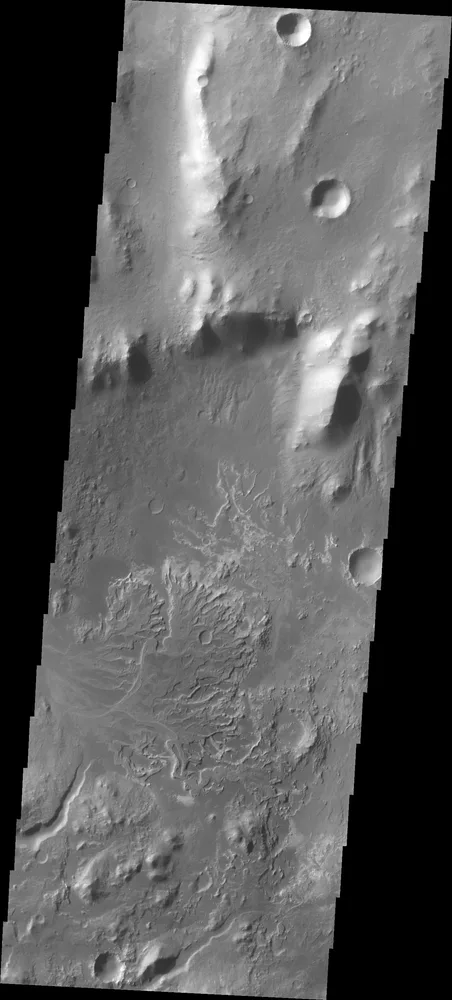
Eberswalde Crater Delta
Image: NASA/JPL/ASU · PIA13159 · NASA sourceOverview
Eberswalde Crater stands as one of Mars' most compelling examples of ancient water activity, hosting the most well-preserved river delta system on the planet. This 65-kilometer-diameter crater in Margaritifer Terra contains what scientists call a "textbook" inverted-channel delta that provides unambiguous evidence of sustained water flow and lake environments on early Mars.
The crater's delta system, measuring 13 by 11 kilometers with six distinct lobes, represents the first clear "smoking gun" evidence that Mars experienced persistent liquid water flow over extended periods. The preserved distributary network, complete with meander cutoffs and inverted channels, tells the story of an ancient river system that flowed into a stable lake environment.
What makes Eberswalde truly exceptional is its preservation state - erosion has inverted the original channels, creating ridges that allow scientists to study the three-dimensional structure of this ancient water system in unprecedented detail, making it a cornerstone site for understanding Mars' hydrological past.
Quick Facts
The Delta System: Ancient River Meets Lake
The Eberswalde delta formed when an ancient river system flowed into a stable lake environment within the crater. As the river's velocity decreased upon entering the standing water, it deposited its sediment load, creating the distinctive fan-shaped delta with six separate lobes representing different phases of river activity.
Delta Characteristics
- • Six distinct depositional lobes
- • Preserved distributary channel network
- • Meander cutoffs and oxbow features
- • Inverted relief preservation
- • Clay-rich sedimentary deposits
- • Evidence of varying water levels
Lake Environment
- • Paleolake level: -1400 to -1350 m
- • Surface area: 410-810 km²
- • Neutral pH conditions
- • Habitable environment indicators
- • Long-term stability evidence
- • Connection to regional water system
Inverted Channels: Erosion Reveals Ancient Waterways
Formation Process
Channel inversion occurred when sediments deposited in the river channels became more resistant to erosion than the surrounding terrain. As the softer materials eroded away over millions of years, the former channel floors were left standing as ridges, creating an inverted topographic relief.
This process preserved the three-dimensional structure of the ancient river system, allowing detailed analysis of flow patterns, channel migration, and depositional environments.
Scientific Value
The inverted channels provide the first unambiguous evidence that some Martian sedimentary rocks were deposited in a liquid environment. The preserved morphology allows scientists to reconstruct ancient flow velocities, discharge rates, and seasonal variations.
Channel measurements reveal straight and meandering paleochannels with evidence of cut-and-fill sequences typical of active river systems.
Paleohydrology Reconstruction
Detailed analysis of the channel geometry and delta structure has allowed scientists to reconstruct the ancient hydrology of the Eberswalde system. The river that formed this delta had channel-forming discharge rates of approximately 200-400 cubic meters per second, comparable to modern Earth rivers.
The system shows evidence of both event-driven flows (possibly from storms or seasonal melting) and sustained base flow, indicating a complex hydrological cycle that operated over timescales of thousands to millions of years.
Clay Minerals and Ancient Habitability
Mars Reconnaissance Orbiter has identified iron and magnesium smectite clays within the Eberswalde delta deposits - minerals that require water to form and are excellent preservers of organic materials. These clays likely formed in the wet subsurface conditions of early Mars, earlier than 3.5 billion years ago.
Biopreservation Potential
Clay minerals are exceptional at preserving organic compounds and potential biosignatures. The clay-rich sediments in Eberswalde represent some of the best targets for detecting evidence of ancient microbial life on Mars.
Neutral pH Environment
The presence of these specific clay minerals indicates the ancient lake environment had neutral pH conditions suitable for life, contrasting with the acidic conditions found at many other Martian locations.
Mineral Composition
Mission Selection History
Eberswalde Crater's exceptional scientific value has made it a top candidate for multiple Mars exploration missions. Its well-preserved delta system and potential for biosignature preservation have repeatedly placed it on mission shortlists, though it has not yet been selected as a primary landing site.
Mars Science Laboratory
Eberswalde was a finalist for Curiosity's landing site due to its preserved delta and potential for studying ancient habitability. Gale Crater was ultimately selected for its geological diversity.
Mars 2020 Consideration
The site was again considered for Perseverance due to its exceptional biosignature preservation potential, though Jezero Crater was chosen for its similar but more accessible delta system.
Future Missions
Eberswalde remains a high-priority target for future sample return missions due to its unparalleled preservation of ancient aqueous environments and delta sediments.
Terraforming Assessment
High Terraforming Potential
Proven ancient habitability with excellent resource indicators
Advantages
- • Proven long-term water stability
- • Clay-rich soils for agriculture
- • Neutral pH environment history
- • Protected crater environment
- • Diverse geological resources
- • Evidence of stable climate conditions
- • Natural basin for water collection
Challenges
- • Limited current water access
- • Dust accumulation in crater
- • Radiation exposure concerns
- • Temperature fluctuations
- • Access to surrounding terrain
- • Atmospheric pressure variations
Scientific and Astrobiological Significance
Astrobiology Cornerstone
Eberswalde Crater represents one of the most compelling locations for the search for ancient life on Mars. The combination of preserved organic-friendly clay minerals, evidence of long-term water stability, and neutral pH conditions creates an ideal target for biosignature detection. The delta's layered sediments act as a natural archive of environmental conditions during Mars' potentially habitable period.
Planetary Hydrological Archive
The intact source-to-sink fluvial system at Eberswalde provides unparalleled insights into Mars' ancient water cycle. The preserved catchment-to-delta system allows scientists to study the complete hydrological process, from watershed erosion to sediment deposition, offering crucial data for understanding how water shaped the Martian landscape billions of years ago.
Future Exploration Opportunities
Despite not being selected for recent missions, Eberswalde Crater remains one of Mars' highest-priority exploration targets. Its exceptional preservation of ancient aqueous environments makes it ideal for advanced sample return missions and detailed astrobiological investigations.
Priority Investigations
- • Detailed organic compound analysis
- • Clay mineral biosignature search
- • Delta stratigraphy drilling
- • Paleoclimate reconstruction
- • Channel system chronology
Sample Return Potential
- • Clay-rich delta sediments
- • Inverted channel deposits
- • Organic-preserved samples
- • Varied depositional environments
- • Stratigraphic sequence samples